Guides · Best time
Best Time to Visit Borobudur in 2026: Season, Month and Time of Day
Central Java has two seasons, and the temple has a daily rhythm of light and heat inside them. Here is when to come, month by month and hour by hour, using the operator's verified opening times rather than guesswork.
 Written with Dewi Lestari, Borobudur temple tour guide since 2022
Short answer
The best time to visit Borobudur is the dry season, May to October, with July and August the most reliably rain-free months in Central Java. Within the day, the structure climb runs 08:30 to 17:00: go early for cooler air, accept the midday heat if you want the strongest light on the relief carvings, or come late for warm light on the west face. The rainy season, November to April, mostly means afternoon downpours, so wet-season mornings still work well.
Dry Season Or Rainy Season?
Dry season, comfortably. May to October brings the reliable skies, with July and August the driest months around Yogyakarta and Magelang. The November to April rainy season still works for morning visits, because the rain mostly falls as afternoon downpours, but December through February stacks up the wettest weather of the year.
Central Java runs on a monsoon clock. The dry season stretches from roughly May to October, and the rainy season from November to April, with December through February the wettest months of the year around Yogyakarta and Magelang. July and August sit at the dry end of the scale, often with only a handful of rainy days in the whole month.
The word "rainy" needs unpacking, though, because it does not mean six months of grey. Wet-season rain here is convective: the morning is often clear, heat and humidity build through the day, and the downpour lands in the afternoon or evening, frequently as a short, violent thunderstorm rather than all-day drizzle. For a temple you would visit in the morning anyway, that pattern is forgiving. A wet-season climb at 08:30 usually happens under workable skies, with the bonus that the rice terraces and the Kedu Plain around the monument are at their greenest.
So the honest ranking is this. May to October is the safe bet, July and August the safest of all. November to April is a real option if you plan mornings and keep afternoons loose. The months to be most flexible in are December to February, when the wettest weather stacks up.
Is It Rainy Season In Indonesia Right Now?
For Java, the calendar answers it: November to April is the rainy season, May to October the dry. The onset shifts a little each year with El Niño and La Niña, and other Indonesian regions run on different rhythms, but for a Borobudur trip the November-to-April wet rule is the one to plan by.
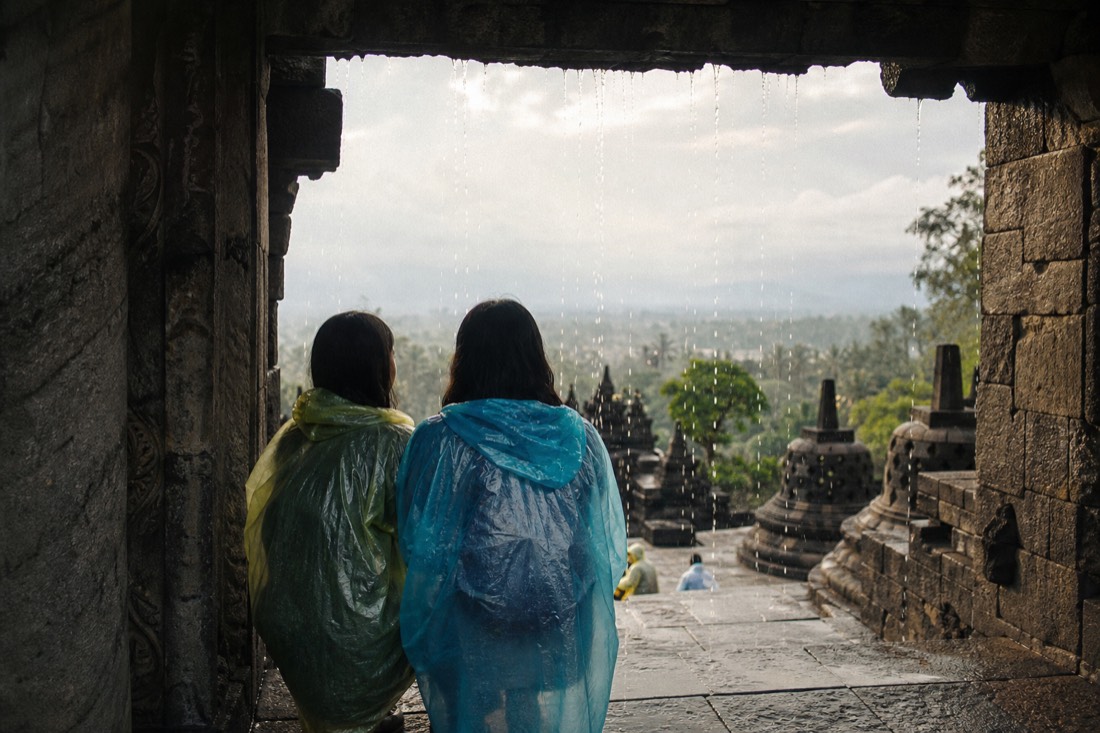
People ask this as if it needed a live weather feed, but for Java the calendar answers it. If your visit falls between November and April, plan for rainy-season conditions: clear-ish mornings, building clouds, an afternoon downpour more days than not. Between May and October, plan for dry-season conditions and the occasional stray shower. The exact onset shifts a little each year with El Niño and La Niña, which is why Indonesia's meteorological agency BMKG publishes seasonal forecasts, but the broad November-to-April wet pattern for Java holds. One caveat for island-hoppers: Indonesia is enormous, and other regions run on different rhythms, so this rule of thumb is for Java, not for the whole country.
What Time Of Day Is Best At The Temple?
Arrive at the 08:30 opening for the coolest climbing air, accept the midday heat if you want the crispest light on the relief carvings, or come late for warm light on the west face before the 17:00 close. The 04:00 sunrise slot on the monument itself is a separate product capped at 100 people a day.
The verified windows first. The structure climb, the ticket foreign visitors actually buy, runs 08:30 to 17:00 every day. The wider grounds open 06:30 to 16:30, but the grounds-only ticket is sold to domestic visitors only, a quirk our tickets guide explains. Before all of that, at 04:00, there is the official sunrise product on the monument itself: IDR 1,000,000 for international visitors and capped at 100 people a day.
Within the 08:30 to 17:00 window, each part of the day trades something for something.
| 04:00, sunrise slot | The official product on the monument itself; IDR 1,000,000 international, capped at 100 people/day |
|---|---|
| 06:30, grounds open | Domestic grounds-ticket holders come in; foreign visitors wait for the climb window |
| 08:30, climb opens | The coolest air of the climbing day; the hour to pick if walking comfort matters most |
| Midday | The hottest stretch, and also the crispest, most direct light on the 1,460 relief panels |
| Late afternoon | Warm, low light on the west face, the classic photo hour, with the 17:00 close as the hard stop |
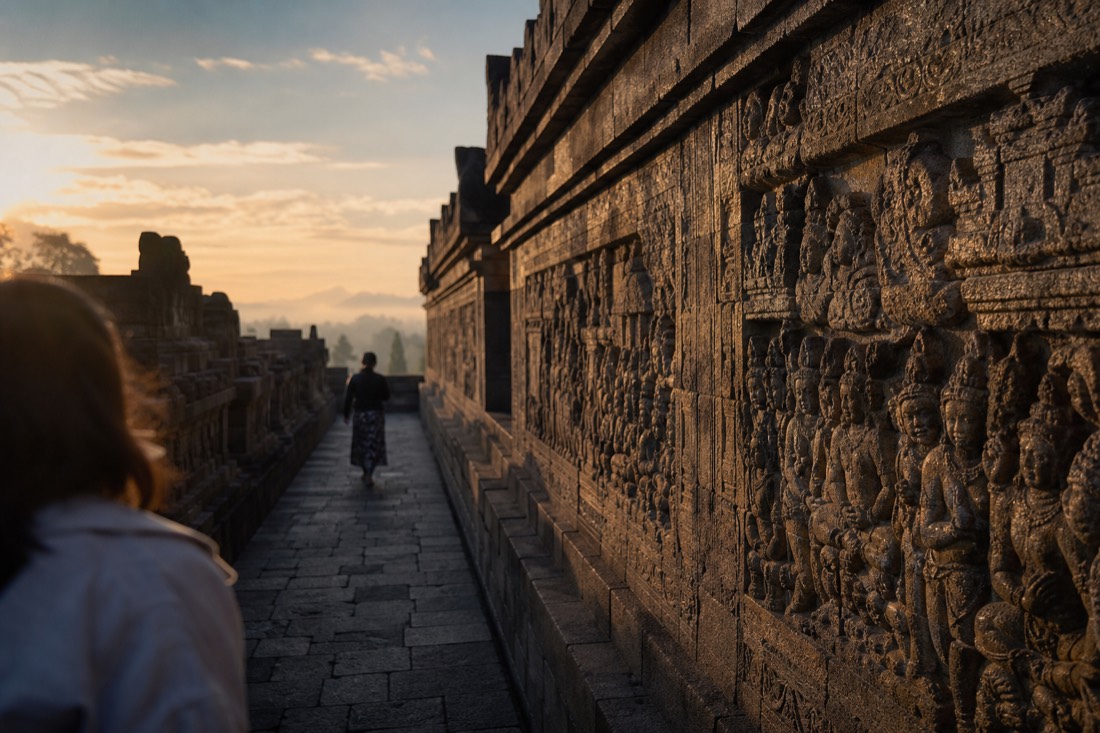
Early, right at opening, you get the coolest air of the climbing day. By afternoon the stone radiates heat, so if walking the terraces in comfort matters most, be at the gate for 08:30. Midday is the hottest stretch, and also, counterintuitively, the best light for the temple's 1,460 narrative relief panels: with the sun high, the carvings sit in crisp relief instead of flat shade, which is exactly what you want if the climb and the panels are your reason for coming. Late afternoon brings warm, low light onto the west face of the monument, the classic hour for photographs of the stupas against the light, with the 17:00 close as your hard stop.
Day of the week is the other lever. Hard current numbers do not exist because the operator publishes no daily quota for the ordinary climb, but the pattern from the capped era, which ran through 2024, is instructive: Kompas reported in April 2024 that weekend demand hit the then-active 1,200-climber ceiling while weekdays drew 300 to 500. Public holidays are their own category; the operator told Antara the site logged a single-day peak of around 11,000 visitors on 29 December during the year-end holidays.
| **Climbers per day, capped era through 2024** | |
| Weekdays | 300 to 500 climbers |
| Weekends | Demand hit the 1,200-a-day ceiling then in force |
| Since July 2025 | The cap on the ordinary daytime climb is gone; only the 04:00 sunrise slot stays limited, at 100 people/day |
The 1,200 figure is historical, from the capped era that ended when daily climbing resumed in July 2025. It is not a current limit; the weekday-versus-weekend spread is the useful part.
And sunrise? Most "sunrise" tours from Yogyakarta, including the top-rated one we list (check live availability & prices on GetYourGuide), watch dawn from Punthuk Setumbu, a hill about 2.5 km from the monument that looks across the mist toward it, then climb the temple after 08:30. It is a beautiful morning, but it is a viewpoint, not the terraces, and our sunrise guide walks through which dawn suits which visitor.
| Dry season | May to October; July and August the driest months in the Yogyakarta and Magelang area |
|---|---|
| Rainy season | November to April; wettest December to February; rain mostly as afternoon downpours |
| Structure climb hours | 08:30–17:00, every day |
| Grounds hours | 06:30–16:30; grounds-only ticket is domestic-only |
| Official sunrise product | 04:00 start on the monument, capped at 100 people/day |
| Weekly closures | None. The Monday closure ended in the third week of July 2025 |
Does Borobudur Ever Close?
Not on a weekly basis, not any more. The old Monday closure of the structure ended in the third week of July 2025, and the temple now opens every day: grounds from 06:30 to 16:30, structure climb from 08:30 to 17:00. Monday-closure warnings still circulating on older travel pages are out of date.
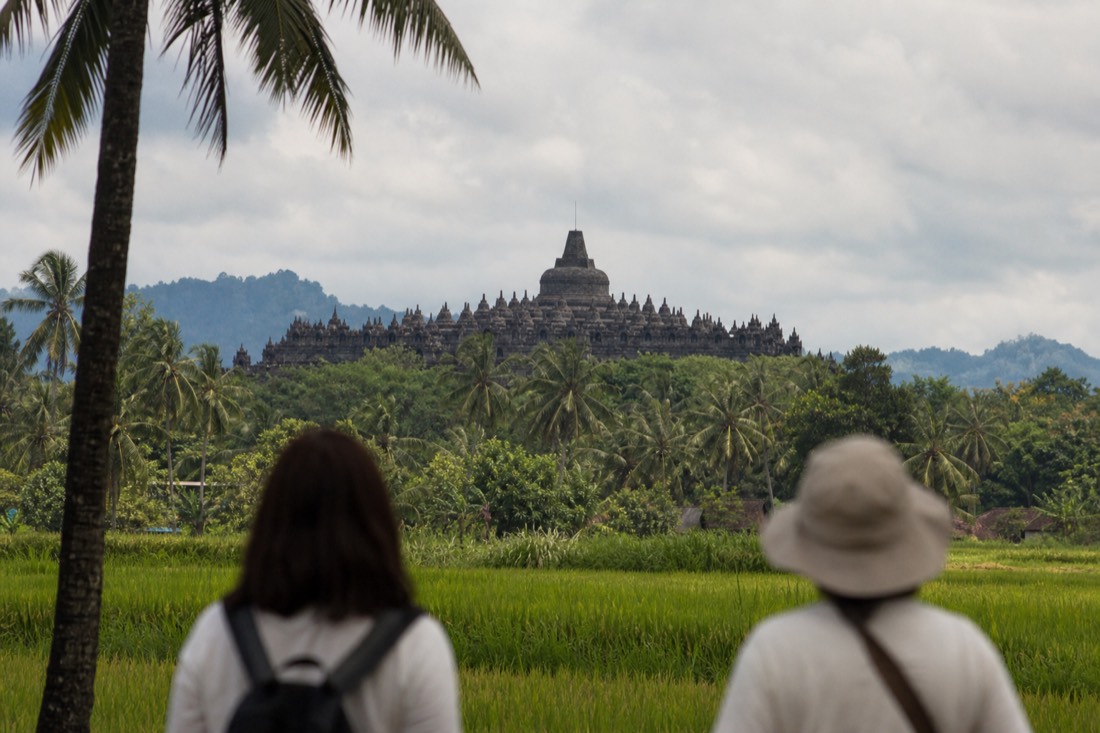
Not any more, on a weekly basis. For a period the operator shut the structure to climbers on Mondays for maintenance, and stale copies of that rule still circulate on older travel pages. The Monday closure ended in the third week of July 2025, a change the operator announced on its own site, and the temple has been open every day since, structure from 08:30, grounds from 06:30. If your only free day in Yogyakarta is a Monday, you can climb.
Timing sorted, the remaining questions are practical: how to get there from Yogyakarta and how long to budget at the temple. Both have short, honest answers.
Common Questions
The short answers: the rainy season runs November to April with December to February the wettest, any dry-season month from May to October is a good pick, the temple has been open every day since July 2025, and a wet-season visit works well as long as you climb in the morning.
What months are the rainy season at Borobudur?
Roughly November through April, with December to February the wettest stretch. Rain in Central Java typically arrives as afternoon or evening downpours, so mornings are often clear even in the wet months.
What is the best month to visit Borobudur?
Any month from May to October works well. July and August are the driest months of the year in the Yogyakarta and Magelang area, with the most reliable clear skies.
Is Borobudur open every day?
Yes. The old Monday closure ended in the third week of July 2025. The structure climb runs 08:30 to 17:00 daily, and the grounds are open 06:30 to 16:30, though the grounds-only ticket is sold to domestic visitors only.
Can you visit Borobudur in the rainy season?
Yes, and it is often a good visit. Downpours cluster in the afternoon, so a morning climb usually stays dry, the landscape is at its greenest, and opening hours are the same as in the dry season. Bring a rain layer and keep afternoon plans flexible.
Whenever you come, the entry rules stay the same: foreign visitors buy the structure-climb ticket, guide and Upanat sandals included, and what to wear matters less than the sandals rule suggests.
Your Next Step
Make The Day Fit Your Trip
Initial editorial recommendation, not a personalized eligibility check.
Borobudur-Only Private Half Day
Have your travel date in mind? Keep the trip to one monument, with a guided climb and private return transport from Yogyakarta. Check the exact option before arranging the rest of your stay.
About 5 hours including travel. English guidance, Borobudur climb admission and Yogyakarta hotel pickup. Meals excluded.
Select “Borobudur Only Half Day Tour” (TG4) on the listing; its headline also advertises the longer combined tour.
Choose a date to see Viator’s scheduled departures. Availability and final price are confirmed on Viator.
Adjust The Plan, Compare Options & Costs
Optional filters change the recommendation. Blank answers keep the general editorial choice. No personal details are saved.
What Changes Between The Options
- Borobudur-Only Private Half Day: About 5 hours including travel. English guidance, Borobudur climb admission and Yogyakarta hotel pickup. Meals excluded. Select “Borobudur Only Half Day Tour” (TG4) on the listing; its headline also advertises the longer combined tour.
- Private Borobudur Climb & Prambanan Day: About 8 hours. English driver/guide; temple admission and the Borobudur climb included. Lunch and a local Prambanan guide cost extra. Mendut monastery substitutes for the temple during renovation. Choose the full-day option (TG1). Monday has a separate option with different Prambanan access. Confirm the exact itinerary for your date.
- Borobudur Climb & Prambanan Options: 5–12 hours depending on option. English guide/driver and Yogyakarta pickup. Temple tickets are included only with the all-inclusive option; lunch extra. Select the actual sunrise, group type and ticket bundle you want. Setumbu is a hill outside the temple; confirm Monday access for your date.
Compare Your Own Quotes
Enter total party costs in the same currency, including matching tickets, transport and extras. This compares your figures, not live prices.
Affiliate links: we may earn a commission if you book, at no extra cost to you. Provider terms, itinerary and final availability apply.